Thursday, June 28, 2012

What's Affecting Our Feet

What's Affecting Our Feet

If you've ever wondered if other people have the same embarrassing foot problems as you, here's the scoop.

Firstly, you're very much not alone. A new survey from the Institute for Preventive Foot Health shows that nearly 80 percent of people ages 21 and older have had at least one problem with their feet. And among people who said they were currently having a foot problem, 59 percent said that they had gone to see a specialist to address it.

The survey included 1,456 people who were surveyed between March 23 and April 2 of this year.

The survey also showed a link between foot problems and body mass index (BMI). People considered obese, with a BMI of 30 or more, were 51 percent more likely to say that the health of their feet was only fair or poor. And people who are obese were 41 percent more likely to currently have some sort of foot issue, and 16 percent more likely to say they have a lot of foot pain (at least a 7 on a scale of 1 to 10).

Researchers also found that 58 percent of people in the survey experience thinning fat pads on their heels, and 83 percent of people didn't know that it is possible for the fat pad to become thinner when you get older.

The five biggest exercise-related activities reported by people to cause foot pain include running and/or jogging, hiking, basketball, walking for fitness purposes and dancing. Meanwhile, the biggest leisure-related activity that led to sore feet was shopping.

Furthermore, the survey researchers analyzed the foot health habits of people with diabetes. They found that just 46 percent of people with diabetes in the survey regularly see their doctor to have their feet screened for problems, and 20 percent said their doctors actually told them that their diabetes put them at risk for foot complications.

Diabetes can cause neuropathy -- nerve damage as a result of diabetes -- which means that your feet may become deformed and lose feeling, according to the American Diabetes Association. In addition, calluses, foot ulcers and poor blood flow in the feet are common issues among diabetics. When all of these feet issues become serious enough, it can lead to amputation of the foot or feet, the American Diabetes Association reported.

"People with diabetes or any other medical condition that compromises blood flow to the lower extremities are at heightened risk for foot ulcers and foot amputations," Dr. Terrence P. Sheehan, M.D., a member of the IPFH Scientific Advisory Board, said in a statement. "These data are alarming and highlight the need for foot health awareness among all health care professionals. Getting people to take care of their feet can be a first step toward getting them moving and on the road to better overall health."

So what were the five biggest foot issues ever experienced by people in the survey? Click through the slideshow to find out, and tell us in the comments: What's ailing your feet?

  • Athlete's Foot

    Twenty percent of people in the study said that they've experienced athlete's foot at least once in their lives. <a href="http://www.ncbi.nlm.nih.gov/pubmedhealth/PMH0001878/" target="_hplink">Athlete's foot</a> is caused by fungus that grows on the feet, although it can also occur on the hands. It's contagious and characterized by blisters, itchy skin and a burning or stinging sensation, according to the A.D.A.M. Medical Encyclopedia. You increase your risk for athlete's foot if you often wear closed-toe shoes, have wet feet for a prolonged period, injure your skin or nail on your feet, and easily sweat.

  • Foot Fatigue/Achy Feet

    Twenty-six percent of people in the survey reported having foot fatigue or sore, achy feet. Discovery Health reported that <a href="http://health.howstuffworks.com/wellness/natural-medicine/home-remedies/home-remedies-for-foot-pain2.htm" target="_hplink">natural options for treating achy feet</a> include soaking them in Epsom salts or carbonated water, or massaging olive oil on the feet.

  • Calluses

    Twenty-seven percent of people in the survey reported having calluses at least once in their lives. Calluses are actually thickened skin that occur when there is a lot of pressure or friction against that part of the skin. <a href="http://www.ncbi.nlm.nih.gov/pubmedhealth/PMH0002212/" target="_hplink">Calluses occur</a> on the soles of the feet, while a corn is thickened skin on or around the toe, according to the A.D.A.M. Medical Encyclopedia. Calluses go away when that part of the foot is not exposed anymore to the friction and/or pressure.

  • Foot Blisters

    Twenty-eight percent of people in the survey reported that they've experienced foot blisters. Just like corns and calluses, <a href="http://kidshealth.org/kid/ill_injure/aches/blisters.html" target="_hplink">blisters occur</a> in response to pressure or friction against the skin. However, blisters occur more quickly than corns or calluses, according to kidshealth.org. If you <a href="http://www.mayoclinic.com/health/first-aid-blisters/WL00008" target="_hplink">have a blister</a>, it's important to keep it covered and intact if possible to avoid infection, according to the Mayo Clinic. But if you <a href="http://www.mayoclinic.com/health/first-aid-blisters/WL00008" target="_hplink">MUST pop the blister</a> because of pain, be sure to wash your hands first, then apply alcohol to the area, and then sterilize a needle with alcohol before using the needle to puncture it, the Mayo Clinic reported. Afterward, apply some antibiotic ointment, and then cover with a bandage. (NOTE: People with diabetes or poor circulation should consult their doctor before popping their own blisters, according to the Mayo Clinic.)

  • Ankle Sprain

    Thirty-one percent of people in the survey said they've sprained their ankle before. According to the American Academy of Orthopedic Surgeons, 25,000 people <a href="http://orthoinfo.aaos.org/topic.cfm?topic=a00150" target="_hplink">sprain an ankle</a> every day. It occurs when the ankle rolls or twists beyond what it's supposed to, and therefore causes the ligaments in the ankle to stretch or even tear. For a mild sprain, where the ligament hasn't been torn, the AAOS recommends <a href="http://orthoinfo.aaos.org/topic.cfm?topic=a00150" target="_hplink">using RICE</a>: resting the ankle, icing it for 20 to 30 minutes at a time for three or four times a day, compressing it with bandages or wraps, and keeping it elevated above the level of your heart for two days.

  • Exercises to Relieve Foot Pain

    In this edition of EmpowHER's "HER Health Expert", Dr. Suzanne Levine discusses exercises that women can do to strengthen the muscles in their feet and relieve foot pain.


Source: www.huffingtonpost.com

Wednesday, June 27, 2012

Do This: Mind Your Waistline, Not Your Manners

Do This: Mind Your Waistline, Not Your Manners

Are you eating too much, too little, or just enough? Find out exactly how many calories you should be consuming for weight loss

Whether you're wondering how quickly you'll finish your next race or exactly how fast you need to run to beat your PR, this tool has the answers

Find out how many calories you burned while walking with this easy-to-use calculator. Enter your stats to get started!

Do you need to lose a few pounds? Find out by calculating your body mass index, a basic indicator of healthy weight

Get a gauge of your body's percentage of fat with this simple tool. Just enter your weight and a few measurements to get started


Source: health.msn.com

Monday, June 25, 2012

Neal M. Blitz, D.P.M., F.A.C.F.A.S.: The High Heel Foot Fracture: A Real Injury

Neal M. Blitz, D.P.M., F.A.C.F.A.S.: The High Heel Foot Fracture: A Real Injury

Breaking your foot from falling in high heels is a real possibility. You could also need surgery to have the bones repaired. As heel heights increase, so do foot injuries associated with them. The higher the heel and skinnier the stiletto, the more likely one is for a fall -- especially on uneven terrain.

The midfoot arch is particularly susceptible to injury when wearing high heels. Remember, the foot is not designed to function in this position, so when one trips or falls in high heels there can be excessive force placed on the midfoot, causing it to break or dislocate.

Below is an example of a dislocated midfoot. The highlighted area illustrates the malalignment. Surgery involves realigning the anatomy and using surgical screws to maintain the position.

As a reconstructive foot surgeon, I can tell you that midfoot injuries come with a lot of problems.

What I call the high heel foot fracture, medical professionals (and lawyers) know as a Lisfranc's fracture or dislocation, named after the arch joints that are involved. The Lisfranc's joint is a complex interlocking articulation of nine bones with strong ligamentous attachment.

The problem with the high heel foot fracture is two-fold. Patients may not appreciate the severity of the injury (so they neglect to seek out medical care), and the injury can go undetected by health care professionals.

Sometimes the injury is very obvious, other times is quite subtle. Fractures can be prominent or not noticeable when the injury is predominantly ligamentous. Treatment can involve casting or surgery depending on the severity and stability of midfoot.

One would think that they would know if they had a bad injury, but often people just shrug off their discomfort as a bad sprain. Of course swelling and bruising suggests a real problem. Some people may hear or feel a popping sensation in the foot when they had a misstep. Pain may be instant or delayed. Patients have also reported only minimal trauma but wake up with a very painful foot -- more pain than typical "high heel hangover" pain.

X-rays can diagnose the high heel foot fracture, but they are not always accurate. A CAT scan may uncover small serious fractures. Surgeons often recommend surgery when the injury is unstable to stabilize the midfoot. A variety of techniques exist involving wires, plates, screws and/or fixators. The prognosis is mixed, as there is a high incidence of post-traumatic arthritis.

I want to point out that these injuries can occur in any shoe gear combined with a misstep. High heels just make you more prone to misstep and falling. And, just because you injure your foot in heels doesn't mean that you will need surgery or have life-long problems. The purpose of this blog is to inform you that these injuries can and do happen. Obviously they are not very frequent considering just how many people wear heels, but they are frequent enough for me to write this blog and tell you about it.

Should you injure yourself; however, be sure to find a specialist who can properly identify any subtle injury. If you insist on wearing heels, just watch your step!

Have you had a high heel foot injury? If so, tell us about it.

---

To learn more about Dr. Blitz, please visit www.nealblitz.com.

For more by Neal M. Blitz, D.P.M., F.A.C.F.A.S., click here.

For more on foot health, click here.

Follow Neal M. Blitz, D.P.M., F.A.C.F.A.S. on Twitter: www.twitter.com/DrNealBlitz

FOLLOW HEALTH AND FITNESS


Source: www.huffingtonpost.com

Just A Little Bit Of Exercise Could Lower Your Breast Cancer Risk

Just A Little Bit Of Exercise Could Lower Your Breast Cancer Risk

Just a little bit of exercise is enough to decrease the risk of breast cancer, according to a new study.

However, University of North Carolina in Chapel Hill researchers said that the best way to lower your risk of breast cancer is to get to a healthy weight and maintain it.

The study, published in the journal CANCER, included 1,504 women who had breast cancer (233 of them had noninvasive breast cancer, while 1,271 people had invasive breast cancer), as well as 1,555 women who didn't have breast cancer. All of the women were between ages 20 and 98.

The researchers found that reproductive-age or postmenopausal women who reported exercising the most in the study -- between 10 and 19 hours each week -- were the ones who had the greatest decrease in breast cancer risk -- a 30 percent lower risk of the disease.

However, even women who exercised less than that seemed to have a decrease in breast cancer risk, especially for the hormone-receptor positive kinds of breast cancer.

And you don't have to be a marathoner or super-exerciser to reap the benefits -- researchers found that all levels of exercise intensity were linked with a decreased risk.

"The observation of a reduced risk of breast cancer for women who engaged in exercise after menopause is particularly encouraging given the late age of onset for breast cancer," study researcher Lauren McCullough said in a statement.

But the important thing is to maintain the healthy weight -- researchers found that if a woman stayed active but put on significant pounds, breast cancer risk increased -- suggesting weight gain can actually negate the positive effects of exercise.

Similarly, TIME magazine reported on a Fred Hutchinson Cancer Research Center study showing that women who experienced a moderate weight loss -- as a result of eating healthily and exercising -- also had a decrease in hormones linked with breast cancer.

Also on HuffPost:


Source: www.huffingtonpost.com

Sunday, June 24, 2012

Mark Hyman, MD: Finger Lickin' Good

Mark Hyman, MD: Finger Lickin' Good

"The ability to simplify means to eliminate the unnecessary so that the necessary may speak." -- Hans Hofmann

Through my work and travels I have been lucky enough to have been exposed to various eclectic cuisine running the gamut from small local cafes to iconic five-star restaurants. I have experienced some amazing food! Yet when I think about the most luxurious and exquisite meals I have had, visions of simple food made from a few natural ingredients are what most excite me.

Don't get me wrong, I admire elegance and have an appreciation of the finer things in life. But to me, beauty lies in simplicity. I don't need the fillers, additives, excessive amounts of sugars, fats, salts and other measures taken to taint the natural goodness of real food. And thanks to you, my community, I now have a plethora of additions to add to my mix of basics.

For those of you following my Basic Plan, or for all of you looking forward to eating in a way that sustains UltraWellness, I am thrilled to announce that I have chosen a winning recipe for you to enjoy. In a moment we'll highlight this week's winner, but let's first explore what makes a Basic Plan recipe noteworthy.

Creating Your Personal UltraMeal

I'd like you to refer back to last week's blog for the essentials on how to create your personal UltraMeal. The two plans are ultimately the same except there is a bit more flexibility regarding carbohydrate intake with the Basic Plan. Remember, this plan is for you if your blood sugar is under control and you are making progress in the Seven Keys of UltraWellness.

Carbs and Your Diet

Let's explore some tips on how to effectively integrate carbohydrates into your diet. I know this is a confusing topic, but after reading this you should be an enlightened carb consumer!

  1. This is a slow carb plan, NOT necessarily a low carb plan. Carbohydrates are essential for our body to function, and I want you to include the right choices in the appropriate portions. Choose primarily from starchy vegetables, whole grains, legumes, and fruit. Of course, get rid of all refined carbohydrates and sugars.
  2. If you are transitioning from an Advanced Plan, start small and progress slowly. Keep insulin from spiking by taking one serving of complex carbohydrates with each meal. Hint: One serving of carbohydrate is equal to 15 grams. As insulin sensitivity improves, you can increase your consumption of slow carbohydrates to 30 grams per meal and 15 grams per snack.
  3. Eat three meals per day with two snacks.
  4. Regardless of the plan you are on always eat a carbohydrate with some protein, fiber or anti-inflammatory fat. Never carb it alone!


This is merely a template for ensuring optimal insulin sensitivity. It is most important that you listen to your body and adjust the amount of carbohydrate based on your individual needs.

Here are examples of SLOW-burning carbohydrates that you can play with:


Starchy Vegetables:

  • Sweet potato (1/2 cup)

  • Cooked Carrot (1 cup)


Whole Grains:

  • Black or brown rice (1/3 cup)

  • Quinoa (1/3 cup)


Legumes:

  • Lentils, Chick Peas and Black Beans (1/3 cup)

  • Black eyed-beans (1/2 cup)


Fruits:

  • Apple (1 small)

  • Peach (1 medium)


For a complete list of carbohydrate guidelines, please join my community and check out the downloads section for my report on "Low Glycemic Vegetables."

There are various ways to incorporate these nutritionally-dense carbohydrates into a meal. Like I said, I like to keep it simple yet interesting. Many of your recipes achieved that, and I can't tell you how difficult it was to select just one!

There was one that embodied all of the principals of whole foods eating and accomplished creativity, elegance, flavor, fun and of course... simplicity. I am proud to announce this week's Basic Plan winning recipe. The winner is...

Roasted Red Pepper & Cannellini Bean Soup

By Michele Rusinko

Serves: 8-10

Prep time: 10 minutes

Cook time: 20 minutes

A creamy and comforting soup for lunch or dinner.

  • 3 red bell peppers, roasted
  • 6 cups vegetable broth (low sodium)
  • 8 cups cannellini beans (preferably soaked overnight)
  • 1 cup basil
  • 3 garlic cloves, minced
  • Dash sea salt to taste


Preparation:

Preheat oven to 350 degrees. Roast peppers until lightly blackened, about 20 minutes (or blacken over a gas burner). Blend peppers, broth, beans, basil, garlic, salt and pepper.

You can also reserve 2-3 cups of the beans and add after blending -- I find the recipe as written not only to be easier on your digestive system but a great way to "hide" beans from those who refuse to eat them, especially kids.

Also, I make my own vegetable broth (boiling a sweet onion, garlic, fresh parsley, salt & pepper for about an hour while the beans are cooking (I also buy my beans dry, soak and then boil).

The easiest way for a beginner is to buy the broth and beans but it is much healthier (and tastier) to prepare your own!

Nutritional Analysis:

Serving Size (about 1 cup): Calories 305, Fat 12 grams, Sat 1.5 grams, Cholesterol 0 milligrams, Fiber 10 grams, Protein 15 grams, Carbohydrates 36 grams, Sodium 60 milligrams

Why I chose "Roasted Red Pepper and Cannellini Bean Soup"

  • Gluten- and dairy-free
  • Low glycemic load, high fiber
  • Lean plant protein
  • Easy to prepare and allows for flexibility -- not a rigid recipe so you can use any herbs available
  • Kid-friendly bean recipe
  • Able to have leftovers and use as a quick lunch the next day
  • Appropriate for Basic Plan. Serve with a green salad for a complete meal


Congratulations to Michele for providing us with a clear example of how simple ingredients can make a winning meal!

I like to think that what Hans Hofmann was referring to in the quote above is the sort of whole foods lifestyle that celebrates nothing more or less than that which nature has provided us with. Let's remove the myth that good food means exorbitant amounts of harmful ingredients so that we can unveil simple pleasures with significant health rewards. Cheers to getting back to basics and celebrating all the tasty creations you and your loved ones can cook up!

Now I'd like to hear from you...

Will you try this recipe with me?

What confuses you about slow and low carbohydrates diets?

Have you tried to a "low" carb diet and how did it work for you?

Please leave your thoughts by adding a comment below.

To your good health,

Mark Hyman, M.D.

Mark Hyman, M.D. is a practicing physician, founder of The UltraWellness Center, a four-time New York Times bestselling author, and an international leader in the field of Functional Medicine. You can follow him on Twitter, connect with him on LinkedIn, watch his videos on YouTube, become a fan on Facebook, and subscribe to his newsletter.

For more by Mark Hyman, M.D., click here.

For more on personal health, click here.

Follow Mark Hyman, MD on Twitter: www.twitter.com/markhymanmd

FOLLOW HEALTH AND FITNESS


Source: www.huffingtonpost.com

Saturday, June 23, 2012

Caroline Myss: Super Soul Sunday: Intuition, Power and Grace

Caroline Myss: Super Soul Sunday: Intuition, Power and Grace

It seems that we never run out of ways to explore who we really are at the core of our inner being. Each new question we ask has the potential to open yet another passageway into the depths of our souls, revealing more about who we really are, what we need to make us happy, what ingredients we require to thrive in this life, and what values sustain us the most for the long haul on this journey of life.

What type of person am I, really? Yet another question that holds the key to a passageway of profound significance. After all, to what am I referring when I say "type"? Well, before I answer that, I want you to recall the habit we all have of meeting someone -- or just observing someone -- and immediately categorizing them as a way of identification. For example, as you maneuver your way through a crowded grocery store aisle, glancing at the faces of all the other people guiding their carts through the aisle, you are simultaneously doing a rapid mental labeling: "I bet that woman is a mother. That guy looks like a typical geek. That kid is such a slob."

Bam... one label flies out of your unconscious right after another as you walk through the familiar grocery store among unfamiliar faces. But these labels are not unfamiliar, are they? Not in the least. In fact, every single person you know would understand not only each of those labels but also the world of information they instantly communicate, because they are more than just labels: These words are archetypes, patterns of human behavior that all of us recognize.

Casually, at a glance, we refer to archetypes as labeling people, because that's what we do all the time. We do that because we are a species that needs to know what and who we are dealing with: friend or foe, neighbor or foreigner, fish or fowl, incoming or outgoing? Many people enjoy people watching, and as they sit at outdoor cafés sipping on their coffees, they are reading people's archetypes as they walk by: "That person is probably an entrepreneur. That guy is definitely a bulldog type. That woman is pure queen." We can't stop ourselves from reading each other's archetypes because these are our social and psychic magnets. The adage "birds of a feather flock together" is not just an old, familiar saying that has proven true more times than we can remember. It's true because archetypes of a feather flock together. You find the people you do in your life because your archetypes are your magnets, drawing you into your relationships -- or, conversely, keeping you out of others.

If I told you that you were "speaking archetypes," you would probably give me a blank look and say, "I'm speaking what?" But that would be the truth. You are speaking archetypes -- and furthermore, you are speaking this language of the unconscious fluently. You were born with an inherent knowledge of archetypal patterns because this is the language that unites us all to each other. We all recognize these patterns in each other instantaneously. It's unfortunate that the word "archetype" sounds so intimidating, whereas "labeling" is a word that doesn't scare you at all, right? But they essentially mean the same thing, and from childhood on, you have been labeling every person you see, beginning with the kids you went to school with. Remember? That kid was a greaser, class clown, teacher's pet, bookworm or nerd. These labels are types of hybrid archetypes, categories we tossed each other into that reflected the type of power we saw in each other at a glance. Archetypes are exactly that: patterns that carry our power and project that power through our personalities and into the day-to-day details of our life, including who we are attracted to in our relationships.

So, what archetype(s) are you? As I wrote about in my book Sacred Contracts, there are countless archetypes in the cosmic field. Think of all the stars in the heavens and imagine all of those as archetypes. Now look just above you and imagine that there are 12 stars that are closest to you. Those stars, or archetypes, have the most influence upon your personality or nature in this life. After all, you could not possibly contain the power of all the stars in the galaxy -- you would implode. We are all different people because we are all comprised of variations of archetypal patterns.

For example, the serial killer is indeed an archetype. We watch television shows about people with that archetype all the time, don't we? But, thankfully, few people actually have that archetype, whereas millions of people have the mother and father archetypes, as you know. Every person has some variation of the child archetype. Some have the wounded child or the abandoned child. Others relate more to the nature child. We are all different, and our differences are indeed rooted in our archetypes.

Knowing your archetypal patterns is the beginning of understanding why you are the way you are. This knowledge is, in other words, the entry into who you really are at the depth and core of your soul.

I invite you to come to my website, Myss.com, to explore my books on archetypes, particularly "Sacred Contracts." Nothing is a more worthy adventure in life than discovering who you truly are.

"Sacred Contracts" excerpt:

She's a five-time New York Times best-selling author. Now, Caroline Myss is sharing her insights on how to tap into your instinct and find your life's purpose. Tune into Super Soul Sunday at 11/10c on OWN, Oprah.com or Facebook.com/OWNtv for Oprah's conversation with Caroline. Before then, read a book excerpt where Caroline writes about coming into her own spiritual purpose.

Chapter 1: What Is a Sacred Contract?

A contract isn't about saying what you meant. It is about meaning what you say. -- Oliver Wendell Holmes (1809-94, physician, poet, and humorist)

When I was a young girl, my father always told me, "I don't care what you do when you grow up, so long as you're a nurse or a teacher." I can still remember my fury when he would say that, because I was interested only in writing. The very idea of teaching school was out of the question. Yet today, in spite of all my efforts to avoid life in the classroom, I am a teacher -- of workshops, of theology, of motivation -- and what's more, I love it. I feel distantly connected to the nursing part of my dad's directive too, through the healing effects my work has had on many people.

My father passed away in 1989, and in the early 1990s, as my mom and I were discussing my work, I said to her, "Well, he won after all." Then I realized that Dad hadn't "won" some sort of game or struggle to control what I did with my life. My Contract had won. My father had been able to glimpse aspects of it, as many parents can, although their vision is often clouded by their own expectations and wishes for their children. Even without knowing about archetypes, Dad had seen something in me that evoked his understanding of the greater function and meaning of a nurse and teacher, and he related it to the career choices that were common for young women at the time.

Still, my Contract does contain the archetypes of the Teacher and Healer, which have manifested through the events of my life, even though I have never formally studied healing or teaching. My higher education has been in journalism and theology, but my work in medical intuition simply "happened." I did my first intuitive reading almost by accident, and then another, and another. Word spread through the neighborhood, and soon I was doing ten to fifteen a week. My growing reputation led to invitations to lecture on my work, which in turn led to invitations to teach workshops.

The most extraordinary feature about how I learned energy anatomy was the precision with which my education was organized. Again, it simply "happened." Within a period of seven to ten days, three people with the same illness would approach me for help. Each one would prove to be coping with similar but slightly different life problems that had contributed to the development of their illness. By the time I read all three individuals, I felt I had grasped the major energy stress factors behind their conditions. Shortly after I completed one trio, another three people in quick succession would contact me for help. Again, each would prove to have the same illness. Gradually my understanding of energy anatomy led me to realize that our biography becomes our biology.

OWN: Oprah Winfrey Network will simulcast this "Super Soul Sunday" episode "Oprah and Caroline Myss: Intuition, Power and Grace" on air and online Sunday, June 24 at 11 a.m. ET/PT on OWN, Oprah.com and Facebook.com/OWNtv.

To preview "Oprah and Caroline Myss: Intuition, Power and Grace" click here.

OWN's Emmy Award-winning "Super Soul Sunday" to simulcast on air and online for the first time Sunday, June 24 at 11 am ET/PT.


Source: www.huffingtonpost.com

Friday, June 22, 2012

CA's Cigarette Tax: The Votes Are In

CA's Cigarette Tax: The Votes Are In

HuffPost's QuickRead...

HuffPost's QuickRead...

Loading...

  • Hollywood
  • LA Restaurants
  • California
  • LA Around Town
More
  • Notifications
  • FRONT PAGE
  • Politics
  • Business
  • Entertainment
  • Media
  • Food
  • Culture
  • Style
  • Women
  • San Francisco
  • ALL SECTIONS

Source: www.huffingtonpost.com

Do This: Mind Your Waistline, Not Your Manners

Do This: Mind Your Waistline, Not Your Manners

Are you eating too much, too little, or just enough? Find out exactly how many calories you should be consuming for weight loss

Whether you're wondering how quickly you'll finish your next race or exactly how fast you need to run to beat your PR, this tool has the answers

Find out how many calories you burned while walking with this easy-to-use calculator. Enter your stats to get started!

Do you need to lose a few pounds? Find out by calculating your body mass index, a basic indicator of healthy weight

Get a gauge of your body's percentage of fat with this simple tool. Just enter your weight and a few measurements to get started


Source: health.msn.com

Thursday, June 21, 2012

Peggy Andover, Ph.D.: The Truth About Non-Suicidal Self-Injury: 5 Myths and Facts

Peggy Andover, Ph.D.: The Truth About Non-Suicidal Self-Injury: 5 Myths and Facts

Most of us take every precaution to keep ourselves safe and healthy. We wear our seatbelts, we refrain from that second piece of cake, we go to the gym. The very idea that someone would intentionally physically hurt himself -- to feel better -- is something that many people find difficult to understand, even unfathomable. But the reality is that non-suicidal self-injury -- what used to be called self-mutilation -- is much closer to home than you might think.

Non-suicidal self-injury (NSSI) is common across various age groups. Recent research shows that it is alarmingly common in young children. A study published in the journal Pediatrics found that nearly 8 percent of third-graders reported injuring themselves without intent to die. That number increases as individuals age, with up to 23 percent of teenagers and 38 percent of young adults reporting self-injury. Statistically speaking, that means 1 out of every 5 people you know has engaged in NSSI. If that statistic is shocking to you, you're not alone. There are a lot of myths and stereotypes about NSSI that haven't been supported by scientific research. Here are just a few:

Myth #1: Self-injury... That's a girl problem, right? Wrong. Rates of NSSI are actually similar between men and women. When we look at samples of people who self-injure, the gender split is usually 50-50. There may be differences in the ways men and women exhibit NSSI, but both genders are equally likely to hurt themselves. For example, in my own research, women were more likely to cut and scratch themselves while men were more likely to burn themselves.

Myth #2: When people say "NSSI," they mean "cutting." Many people think of cutting and burning when they think of self-injury, but there are many other ways to inflict physical harm on one's body. Any behavior that is done to cause tissue damage, but without intent to die, can be NSSI. Common behaviors include picking at the skin or scabs, self-hitting, or biting. Although people used to think that cutting was the most common behavior, recent research indicates that scratching and skin-picking may actually be as common as, if not more common than, cutting.

Myth #3: NSSI is a cry for help -- or, someone who hurts himself on purpose is being manipulative. The idea of intentionally causing injury to oneself is foreign to many people and difficult to understand. Why would someone hurt himself on purpose? For many people who engage in NSSI, the behavior is a way of dealing with aversive feelings, thoughts, or situations. Most people who engage in NSSI do so to regulate emotional and physical experiences, such as reducing feelings of sadness or anger. Even though you might think that the pain of self-injury would make someone feel worse, people often do it because it makes them feel better, at least short-term. NSSI is an adverse coping strategy, but people engage in it because it's easily available and effective at regulating emotional, physical, and social experiences.

Myth #4: People who hurt themselves on purpose are trying to kill themselves, even if they say they're not. Although both suicide and NSSI involve intentional injury, they are distinct behaviors. Most importantly, they differ in intent to die; by definition, NSSI must be performed without suicidal intent. However, a significant number of people with a history of suicide attempts also report a history of non-suicidal self-injury, and our research has shown that history of self-injury without suicidal intent is a key risk factor for attempted suicide. Although the behaviors are distinct, the link between them further emphasizes the need to address NSSI.

Myth #5: Self-injury is a sign of a larger problem. This one may not be a myth. But let's be clear what we're talking about: In the current Diagnostic and Statistical Manual, which is used by psychologists, psychiatrists, physicians, and other mental health professionals to diagnose psychiatric disorders, NSSI is listed as a symptom of only one disorder, borderline personality disorder. However, not everyone who engages in NSSI has borderline personality disorder. In fact, self-injury isn't symptomatic of just one disorder. Research that colleagues and I have conducted has shown that self-injury can also be associated with a large number of other disorders, including depression, anxiety, eating disorders, and substance abuse. I've also found that some people who self-injure don't even meet criteria for a psychiatric disorder.

Given the significant negative consequences associated with NSSI, like scarring, infection, increased risk of self-injury, depression, anxiety, and shame, it is essential that we correct these myths. Only by educating ourselves about NSSI will we be able to prevent misdiagnosis and make sure that our friend, coworker, brother, mother, or child gets the treatment that he or she really needs.

This piece was written in association with The Op-Ed Project.

For more by Peggy Andover, Ph.D., click here.

For more on mental health, click here.

Need help? In the U.S., call 1-800-273-8255 for the National Suicide Prevention Lifeline.


Source: www.huffingtonpost.com

Tuesday, June 19, 2012

'Extreme Couponing': Judy Admits She May Need Medication

'Extreme Couponing': Judy Admits She May Need Medication

So, is "Extreme Couponing" (Mon., 10 p.m. ET on TLC) as it's depicted on the popular reality show simply people being thrifty and smart about saving, or could it be the outward manifestation of a mental disorder like obsessive compulsive disorder? On this week's episode, Judy seemed to agree that she probably suffers from OCD, but she wouldn't have it any other way.

When people have suggested that she could take medication to help with her compulsions, Judy rejected the thought outright.

"Why would I do that? Then I wouldn't have this," she said, referring to her massive stockpile. "The medication would alter my brain and I like it just the way it is."

And Judy isn't just content to enjoy the spoils herself, She teaches a class on couponing techniques, for possible future shoppers featured on "Extreme Couponing." It's the circle of savings.

"Extreme Couponing" airs Mondays at 10 p.m. ET on TLC.

TV Replay scours the vast television landscape to find the most interesting, amusing, and, on a good day, amazing moments, and delivers them right to your browser.


Source: www.huffingtonpost.com

Monday, June 18, 2012

Which City Has The Most Gyms?

Which City Has The Most Gyms?

In some cities, a nearby gym or fitness center can be as easy to find as the nearest Starbucks (read: on every corner).

But in other neighborhoods, finding a place to exercise isn't so simple, and the outcome can be a serious effect on residents' health. In particular, people who live in poorer neighborhoods with lower levels of education and more families with a female head of household are less likely to exercise, according to a 2008 study, at least partially due to discomfort at going outside to work out.

A recent survey ranking a number of metropolitan areas across the U.S. set out to count the available and accessible fitness centers in each different city.

The survey, released last month by athletic apparel company Russell Athletic and fielded by Sperling's BestPlaces, ranked U.S. cities based on healthy-living measures such as weekly servings of fruit and vegetables, hiking and running trails per capita, percent of the population commuting by foot or bike and more, in an attempt to name the Healthiest Habitats, according to a press release.

Of course, simply having a number of spots to lay your yoga mat doesn't mean you're hitting your weekly recommendations for exercise. That's another story (stay tuned!). But providing residents with enough easily accessible and safe places for exercise is certainly an encouraging step.

To calculate the ranking below, the researchers added up the number of gyms, health clubs and athletic clubs in each area and then adjusted by the city's population, so that a city densely packed with gyms (and people) like New York, with 243 fitness centers, doesn't overpower smaller cities with fewer total gyms but more per capita.

According to a summary of methodology emailed to The Huffington Post, among the fitness centers included were popular chains such as:

  • 24 Hour Fitness

  • Bally Total Fitness

  • LA Fitness

  • Planet Fitness

  • Snap Fitness

  • Curves Fitness

  • Anytime Fitness

  • World Gym

  • Gold’s Gym

Click through the slideshow below to see which cities have the most spaces for sweating. Then tell us in the comments if your city made the list.

  • 10. Kansas City

    There are 31.4 gyms and fitness centers per million people in the area, and a total of 64. <br><br> <em>Flickr photo by <a href="http://www.flickr.com/photos/davedehetre/6804871515/" target="_hplink">davedehetre</a></em>

  • 9. Louisville-Jefferson County

    There are 31.9 gyms and fitness centers per million people in the area, and a total of 41. <br><br> <em>Flickr photo by <a href="http://www.flickr.com/photos/fleur-design/543441831/" target="_hplink">The Pug Father</a></em>

  • 8. Pittsburgh

    There are 32.7 gyms and fitness centers per million people in the area, and a total of 77. Pittsburgh also ranked in the top 10 for the number of residents who walk or bike to work. <br><br> <em>Flickr photo by <a href="http://www.flickr.com/photos/jmd41280/3663637105/" target="_hplink">jmd41280</a></em>

  • 7. Indianapolis-Carmel

    There are 33.6 gyms and fitness centers per million people in the area, and a total of 59. <br><br> <em>Flickr photo by <a href="http://www.flickr.com/photos/ellenm1/5155680919/" target="_hplink">ellenm1</a></em>

  • 6. Salt Lake City

    There are 36.5 gyms and fitness centers per million people in the area, and a total of 41. Salt Lake City also ranked in the top 10 for hiking and walking trails and amount of residents who get regular exercise. <br><br> <em>Flickr photo by <a href="http://www.flickr.com/photos/countylemonade/7169130178/" target="_hplink">CountyLemonade</a></em>

  • 5. Austin-Round Rock

    There are 38.5 gyms and fitness centers per million people in the area, and a total of 66. Austin-Round Rock is also home to some of the healthiest eaters, according to the Healthiest Habitats list, with residents eating an average of <a href="http://www.huffingtonpost.com/2012/06/07/cities-healthy-eating_n_1575449.html#s=1063941" target="_hplink">33.6 servings of fruits and vegetables a week</a>. <br><br> <em>Flickr photo by <a href="http://www.flickr.com/photos/stuseeger/4852016302/" target="_hplink">StuSeeger</a></em>

  • 4. Portland-Vancouver-Beaverton

    There are 38.6 gyms and fitness centers per million people in the area, and a total of 86. Portland-Vancouver-Beaverton ranked fourth overall on the Healthiest Habitats list. <br><br> <em>Flickr photo by <a href="http://www.flickr.com/photos/travelportland/877440445/" target="_hplink">travelportland</a></em>

  • 3. New Orleans-Metairie-Kenner

    There are 45.4 gyms and fitness centers per million people in the area, and a total of 53. <br><br> <em>Flickr photo by <a href="http://www.flickr.com/photos/respres/2645349645/" target="_hplink">JefferyTurner</a></em>

  • 2. Milwaukee-Waukesha-West Allis

    There are 54 gyms and fitness centers per million people in the area, and a total of 84. <br><br> <em>Flickr photo by <a href="http://www.flickr.com/photos/beigephotos/4988867266/" target="_hplink">Beige Alert</a></em>

  • 1. Minneapolis-St. Paul-Bloomington

    There are 73.8 gyms and fitness centers per million people in the area, and a total of 242. Minneapolis-St. Paul-Bloomington ranked tenth overall on the Healthiest Habitats list. <br><br> <em>Flickr photo by <a href="http://www.flickr.com/photos/davidgardner/310142197/" target="_hplink">David G...</a></em>

  • Related Video

For more on fitness and exercise, click here.


Source: www.huffingtonpost.com

Saturday, June 16, 2012

Jordan K. Turgeon: Lessons From Dad: Making A Commitment To Fitness

Jordan K. Turgeon: Lessons From Dad: Making A Commitment To Fitness

At 52 years old, my dad is one of the most (if not the most) in-shape people I know. He's not the kind of person who's content just sitting around and hanging out; Bob Turgeon wants to be doing something.

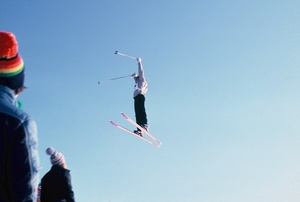
Athletics and fitness have always played a key role in my dad's life, and whereas my exercise growing up came mostly in the form of scheduled activities, the only person holding my dad accountable was himself. During high school, he saved up his study hall periods so he could leave school early during the winter season and spend his afternoons practicing at the nearby ski area in Bloomington, Minn. By age 18 he was touring with the Canadian World Cup Ski Team, competing freestyle for his home country from 1978 to 1982.

2012-06-16-R1039730002.jpg

Dad could've made it to the Olympics; unfortunately, freestyle skiing wasn't part of the games until several years after he'd left the world of competitive sport. It was too hard to make a living as an athlete back then, he says. But the drive to keep healthy and active had already long been instilled.

I of course grew up a ski bunny; my first time out on the slopes I was just 1.5 years old -- that's me in the pink snowsuit in the below slideshow. Dad and Mom were my instructors (she's a skier too). I played soccer in elementary school, and in high school I had dance practice six days per week. Exercise was part of my day-to-day life. It was assumed. I never had to think about how I'd fit it into my schedule, like my dad did when he was my age.

So it was a shock when, after graduation, I didn't have that schedule anymore. I didn't know how to stay active without a 2.5-hour practice to attend. The summer after my freshman year of college was around the time my dad introduced the concept of the "commitment to fitness."

A simple enough concept: Do something -- anything -- to move and get some exercise. The word "commitment" might sound a bit intimidating, but it really didn't have to be all that complicated or intense, Dad said; a Rollerblade around the neighborhood or a long walk would do. Because no one else could schedule it for me anymore.

Name a fitness activity and my dad's likely tried it, so in him I had a top-notch workout partner. And he used my competitive nature to goad me on. Take, for example, the "bike-blade," something I'd like to think we invented (but don't take my word for it). Near our family home in Minnesota is a park about six or seven miles round. Dad would wear his Rollerblades; I'd be on my bike. The goal? To see if I could make it around the park without him catching up to me. I'd get a two-minute head start. Each time I got progressively farther along the trail, but each time he'd inevitably catch up with a wave and a "Sorry! Maybe next time!" as he zoomed by. (I swear, someday I will beat him.)

A few years ago, my dad got in an accident while heli-skiing in Alaska and blew out his knee. I think my family released a collective gasp, wondering if the injury was going to prompt some kind of mid-life fitness crisis. Dad was out on the mountains the following winter with his fixed ACL. We shouldn't have been surprised.

My dad's taught me a lot of things: responsibility, determination, courage, how to make scrambled eggs in the microwave... But making a commitment to fitness is one lesson that stands out. It's a weekly challenge for me, fitting it all in, and probably always will be, but I know that whenever I get in a fitness slump -- usually because work is too busy or I'm just worn out and in a mental funk -- I can call him for a pep talk.

"You always feel good after you exercise," he constantly reminds me. Even if I can only get to the gym one day that week, it's better than not going at all.

The competitive spirit that once helped my dad work his way onto the Canadian World Cup Ski Team is definitely still with him, even if the goals themselves have changed.

"I'll never be what I was when I was competing," my dad says. "But when I'm out there I want to be skiing at as high a level as possible. Because that's what I enjoy: participating at a high level. I hate to suck."

If I'm in half as good of shape when I'm 52 years old as my dad is today, I'll be feeling pretty good about myself. Happy Father's Day, Dad!

  • My first time out on the slopes. They didn't make ski boots small enough, so my feet are strapped to the skis! No, I'm not upset in this photo, just squinting in the sunlight.

  • Dad and me ice skating in our backyard. One of our favorite Minnesota winter activities.

  • Dad and me skiing, 5 years old.

  • Dad on a moguls run during a local competition while on break from the World Cup tour.

  • Dad mid-helicopter at a local, Midwest competition while on break from the World Cup tour.

  • Dad practicing aerials at the local ski area in Bloomington, Minn.

  • Dad working on his ski ballet routine. Ski ballet has since been removed from competitive freestyle skiing.

  • Dad and me skiing in Colorado, winter 2010.

For more by Jordan K. Turgeon, click here.

For more on fitness and exercise, click here.

Follow Jordan K. Turgeon on Twitter: www.twitter.com/jordanturgeon


Source: www.huffingtonpost.com

The Health Benefits Of Golf

The Health Benefits Of Golf

The 2012 U.S. Open will close on Sunday, June 17, and though the event celebrates the driving and putting achievements of professional athletes like Tiger Woods and Luke Donald, it's a good opportunity to revisit all the ways that this sport, often viewed as more of a leisure activity, actually improves fitness and health.

In one large 2008 study from Sweden's Karolinska Institute comparing health outcomes for 300,000 golfers to the rest of the population, researchers discovered that the golfers had a 40 percent lower death rate than non-golfers of the same gender, age and socioeconomic circumstance. What's more, they enjoyed an average five year increase in life expectancy.

The researchers credited several factors for golf's healthful effect. "A round of golf means being outside for four or five hours, walking at a fast pace for six to seven kilometres, something which is known to be good for the health," said lead study author Anders Ahlbom in a statement at the time of the study's release. "People play golf into old age, and there are also positive social and psychological aspects to the game that can be of help."

But just how strenuous is a round of golf? An experiment conducted by Neil Wolkodoff of Denver's Rose Center for Health and Sports Sciences and detailed in Colorado AvidGolfer magazine found that golfing a 18-hole course while carrying one's own bag burned a full 721 calories. Using a pull cart was similarly beneficial, burning 718 calories, though there was no shame in bringing a caddy along: walking alongside a caddy, unencumbered by the bag, still managed to burn 613 calories and riding in a cart burned 411 calories.

So next time you find yourself in close proximity to a course (this Father's Day perhaps?), it might be worthwhile to take a page from both the champs -- and the weekend warriors -- and hit the links.


Source: www.huffingtonpost.com

The Health Benefits Of Golf

The Health Benefits Of Golf

The 2012 U.S. Open will close on Sunday, June 17, and though the event celebrates the driving and putting achievements of professional athletes like Tiger Woods and Luke Donald, it's a good opportunity to revisit all the ways that this sport, often viewed as more of a leisure activity, actually improves fitness and health.

In one large 2008 study from Sweden's Karolinska Institute comparing health outcomes for 300,000 golfers to the rest of the population, researchers discovered that the golfers had a 40 percent lower death rate than non-golfers of the same gender, age and socioeconomic circumstance. What's more, they enjoyed an average five year increase in life expectancy.

The researchers credited several factors for golf's healthful effect. "A round of golf means being outside for four or five hours, walking at a fast pace for six to seven kilometres, something which is known to be good for the health," said lead study author Anders Ahlbom in a statement at the time of the study's release. "People play golf into old age, and there are also positive social and psychological aspects to the game that can be of help."

But just how strenuous is a round of golf? An experiment conducted by Neil Wolkodoff of Denver's Rose Center for Health and Sports Sciences and detailed in Colorado AvidGolfer magazine found that golfing a nine-hole course while carrying one's own bag burned a full 721 calories. Using a pull cart was similarly beneficial, burning 718 calories, though there was no shame in bringing a caddy along: walking alongside a caddy, unencumbered by the bag, still managed to burn 613 calories and riding in a cart burned 411 calories.

So next time you find yourself in close proximity to a course (this Father's Day perhaps?), it might be worthwhile to take a page from both the champs -- and the weekend warriors -- and hit the links.


Source: www.huffingtonpost.com

Tuesday, June 12, 2012

Perks Of Delayed Fatherhood? Your Children May Live Longer

Perks Of Delayed Fatherhood? Your Children May Live Longer

Men who have delayed fatherhood may finally have some good news, after a recent study suggests that children of older men may live longer as a result.

Research from Northwestern University discovered that telomeres (the tips on the end of chromosomes that prevent DNA damage) could hold the secret as to why some people live longer than others.

As we age, our telomeres shorten and generally the smaller telomeres length, the shorter the life expectancy.

older father

However, scientists have discovered that in sperm, the opposite is true and that telomeres lengthen with age.

The research, led by Dr Dan Eisenberg from the Department of Anthropology, found that the older a man is when he becomes a father, the longer the telomeres his children tend to have.

Researchers claim that the genetic code (DNA) in an older man's sperm (that favours a longer life) may get passed onto his children, who are likely to pass it onto their own children and so on.

"This suggests delayed paternal reproduction can lead to cumulative, multi-generational increases in telomere length in descendants, which could promote longevity," Dan Eisenberg said in a statement.

SEE ALSO:

During the study, researchers analysed the DNA of 1,779 young adults aged between 15 and 43-years old. Telomeres were measured in blood samples and were found to be longer in male participants who fathered children later in life.

The research was published in the Proceedings of the National Academy of Sciences.

Carol Greider of Johns Hopkins University, was the first to discover the link between teleomeres and life expectancy in 2009.

A previous study published in Nature journal claimed that older fathers are at a higher risk of having a child with autism, reports TIME.com.

This risk may be because the older men are, the more times their sperm-creating cells have copied themselves, and each time a cell is copied, there is a chance that a mutation will occur, stated the study.

  • Frozen Embryo IVF Babies 'Healthier And Heavier'

    IVF babies born from frozen embryos are heavier and healthier than those born from fresh embryos, new fertility research has discovered. <a href="http://www.huffingtonpost.co.uk/2012/01/06/frozen-embryo-ivf-babies-healthier_n_1186664.html" target="_hplink"><strong>Read the full story here</strong></a>.

  • Three Parent IVF

    Babies with three biological parents could soon be a reality after a new £6m laboratory has been given the go ahead and funding to develop a unique IVF technique which uses DNA from a third party. <a href="http://www.huffingtonpost.co.uk/2012/01/20/three-parent-ivf-may-be-legal_n_1218681.html" target="_hplink"><strong>Read the full story here</strong></a>.

  • Twins Beat The Odds To Be Born Five Years Apart

    Reception class pupil Reuben Blake went back to school today, but his twin sister will have to wait another five years until she is old enough. That is because, despite the fact the brother and sister were conceived from the same batch of embryos, they were born five years apart to parents Simon and Jody Blake. <a href="http://www.huffingtonpost.co.uk/2012/01/04/twins-born-five-years-apart-floren-simon-blake_n_1182717.html" target="_hplink"><strong>Read the full story here</strong></a>.

  • Lab-Grown Sperm - Coming Soon?

    Scientists have made a breakthrough that could enable infertile men to father children with their own sperm. Researchers at Muenster University in Germany grew mouse sperm in a laboratory and believe the same technique could be used with human sperm. <a href="http://www.huffingtonpost.co.uk/2012/01/03/sperm-grown-in-laboratory_n_1180695.html" target="_hplink"><strong>Read the full story here</strong></a>.

  • Scientists Uncover Female 'Fertility Switch'

    Scientists from the Imperial College London have discovered a 'fertility switch' that could help treat infertility and miscarriage in the future. <a href="http://www.huffingtonpost.co.uk/2011/10/17/new-hope-for-women-struggling-to-conceive_n_1015554.html" target="_hplink"><strong>Read the full story here</strong></a>.

  • Women Who Donate Eggs For IVF Will Have Payments Tripled

    The Human Fertilisation and Embryology Authority have announced today that women who donate their eggs to infertile couples, will be rewarded an extra £500 in costs. <a href="http://www.huffingtonpost.co.uk/2011/10/19/women-will-receive-triple-the-payment-for-egg-donation_n_1019830.html" target="_hplink"><strong>Read the full story here</strong></a>.

  • Baby Born Using 25-Year-Old Sperm

    A baby girl was born after being conceived using sperm that has been kept frozen for 25 years - the longest that sperm has been kept frozen and then successfully used for IVF in the UK. <a href="http://www.huffingtonpost.co.uk/2012/02/06/baby-conceived-by-oldest-frozen-sperm_n_1257653.html" target="_hplink"><strong>Read the full story here</strong></a>.


Source: www.huffingtonpost.co.uk

Monday, June 11, 2012

Everything That You Need To Know About Tennessee Drug Addiction Rehab

Everything That You Need To Know About Tennessee Drug Addiction Rehab
Deciding to check on right into a drug addiction rehab in wisconsin just isn't a simple decision as a result and there's there is no answer why you need to pay a lot of money for getting your lifestyle straight into track. Normally made available, it's paramount that you simply seek the cheaper drug abuse rehabilitation in wisconsin as you certainly donrrrt have got to hurt your wallet to get the toxin from the body. Cheap drug rehabs in Wisconsin are obtainable offer you make out time to find them within the right place.

Deciding to check on right into a drug addiction rehab in wisconsin just isn’t a simple decision as a result and there’s there is no answer why you need to pay a lot of money for getting your lifestyle straight into track. Normally made available, it’s paramount that you simply seek the cheaper drug abuse rehabilitation in wisconsin as you certainly donrrrt have got to hurt your wallet to get the toxin from the body. Cheap drug rehabs in Wisconsin are obtainable offer you make out time to find them within the right place.

In regards to making payments in the drug and alcohol rehabilitation center the price the fact that drug abuser or his loved ones pay is majorly a subjective issue. What this signifies in simple words is the price that the given person may suffer that may be affordable and applicable to him probably are not okay to a new person. The thinking behind seeking cheap alcohol rehabs in Wisconsin will be over justified. Cheap rehab centers can be relative and whereas someone may term the purchase price charged in a given rehabilitation center as cheap, others may term it expensive.

If you are one of the persons seeking cheap drug an alcohol centers either for yourself or maybe your cherished one, maybe the first source that you can conduct your quest is in the non-profit alcohol and drugs detox centers. These centers happen in every state and therefore are funded and managed either by religious organizations or even the authorities in the country or state. Since main aim of non profit drugs and alcohol detox centers is not to build earnings from the drug problem, the charges made are low and cheap in comparison to the other profit oriented drug rehab centers in Wisconsin.

Together with these non-profit drug centers, additionally, you will find rehabilitation centers that provide cheap drug rehabilitation programs which you can get by short listing the many medications centers and after that taking the trouble to get hold of every one of them and obtain to know what it will cost. The most effective way to locate a cheap wisconsin drug abuse rehab program is always to look online that you have a very range of options to choose from and improve your current circumstances in a fashion that just isn’t expensive.

To receive cheap alcohol rehabs in Wisconsin, you’ll need to wait and see and show off for the children tirelessly. Always remember that drug rehabs in Wisconsin exist owing to you and also they are designed for giving you an additional chance in everyday life that you ought to take advantage of.

Consequently, don’t hesitate to take the correct alcohol rehabs in wisconsin and drug addiction rehabilitation in wisconsin making your lifetime beautiful.


Source: feedproxy.google.com

Friday, June 8, 2012

Could ‘Crack Neck’ Chiropractors Trigger A Stroke?

Could ‘Crack Neck’ Chiropractors Trigger A Stroke?

A common procedure for easing neck pain has come under fire from experts who argue ‘cervical spine manipulation’ could trigger a stroke.

Chiropractors regularly ‘crack’ a patient’s spine to treat neck and back pain - but experts writing in the British Medical Journal suggest that applying thrusts to the neck area of the spine could have damaging knock-on health effects.

Neil O'Connell, from the Centre for Research and Rehabilitation at Brunel University and colleagues argue that cervical spine manipulation "may carry the potential for serious neurovascular complications" reports the BBC.

neck pain

They also say that studies "provide consistent evidence of an association between neurovascular injury and recent exposure to cervical manipulation." Such injuries include tearing the lining of the vertebral artery, which is located in the neck and supplies blood to the brain, and stroke.

As a result, the study’s authors have labelled the treatment “unnecessary and inadvisable”.

According to their report, the controversy surrounding the association between manipulation and neurovascular complications is longstanding and not fully resolved, partly because it is difficult to obtain conclusive evidence on rare adverse events.

However, the authors do accept that the incidences of of stroke resulting from spine cracking are very low.

According to Daily Mail, an epidemiologist from Toronto University in Canada, Professor David Cassidy, said there was evidence that neck manipulation benefited patients and has cast doubt on whether it causes strokes.

He suggested neck pain and headache may be an early sign of tearing of the vertebral artery, prompting the visit to chiropractor in the first place.

As a result, a problem which is pre-existing may wrongly be attributed to manipulation, reports the Daily Mail.


  • Zoe Salmon celebrates carrying the Olympic Flame in Antrim Forum, Antrim Town on behalf of Samsung - a presenting partner of the London 2012 Olympic Torch Relay, Belfast. (Photo credit: Liam McBurney/PA Wire

  • A member of the Bathini Goud family administers 'fish medicine' to a patient at the Katedan stadium in Hyderabad, on June 8, 2012. The medicine, which has been offered by the family of the southern Indian city to patients for the last 161 years as a cure to asthma and other breathing disorders, is placed in the mouth of a live murrel fish and then slipped into the mouth of the patient. The medicine is administered on the auspicious day of 'Mrigasira Karti' which falls in June with the onset of the annual monsoon. The treatment, which is based on a secret herb formula, draws thousands of people from all over the country. (Photo credit: NOAH SEELAM/AFP/GettyImages)

  • The satirical puppet of Act Leader Don Brash hangs from a wall after a fire at The Backbencher Pub and Cafe on June 8, 2012 in Wellington, New Zealand. The satirical political puppet of United Future leader Peter Dunne and Maori Party co-leader Pita Sharples were damaged in the fire that is that is thought to have started in the kitchen. The neighbouring apartment complex was forced to evacuate, but no one was injured in the fire. (Photo credit: Hagen Hopkins/Getty Images)

  • Sri Lankan cricketer Sanath Jayasuriya (L) performs during the launch of this season's Colors television channel Hindi reality dance show 'Jhalak Dikhhla Jaa' in Mumbai on June 7, 2012. (Photo credit: STRDEL/AFP/GettyImages)

  • From left, Boston Celtics' Paul Pierce, Kevin Garnett and Ray Allen sit on the bench late in the fourth quarter while trailing the Miami Heat in Game 6 of the NBA basketball Eastern Conference finals, Thursday, June 7, 2012, in Boston. Miami won 98-79. (Photo credit: AP Photo/Charles Krupa)

  • A Philippine wildlife official holds a sailfin lizard at the parks and wildlife in Manila on June 8, 2012. This lizard one of six of the colourful reptiles that were repatriated to Manila on June 7, 2012 after Hong Kong customs seized them from smugglers on February 8, 2012. The one-metre-long, river-dwelling lizards are found only in the Philippines and are considered threatened species, making it illegal to catch or traffic them. (Photo credit: JAY DIRECTO/AFP/GettyImages)

  • Indian believers wait to collect their tokens prior to receiving 'fish medicine' at the Katedan stadium in Hyderabad, on June 8, 2012. The medicine, which has been offered by the family of the southern Indian city to patients for the last 161 years as a cure to asthma and other breathing disorders, is placed in the mouth of a live murrel fish and then slipped into the mouth of the patient. The medicine is administered on the auspicious day of 'Mrigasira Karti' which falls in June with the onset of the annual monsoon. The treatment, which is based on a secret herb formula, draws thousands of people from all over the country. (Photo credit: NOAH SEELAM/AFP/GettyImages)


Source: www.huffingtonpost.co.uk